




Global Pahadi
Jamun Honey
Bees make Jamun honey as they gather nectar and tiny white flowers belonging to the Syzygium cumini tree, which is usually called Jamun or Java plum, or Indian blackberry. The bees naturally collect nectar from Jamun forests when Jamun flowers are in maximum bloom, which is during late spring and early summer. Around 70%–80% of the pollen and nectar collected by the bees comes from Jamun flowers, and that is the reason we call it Jamun Honey.
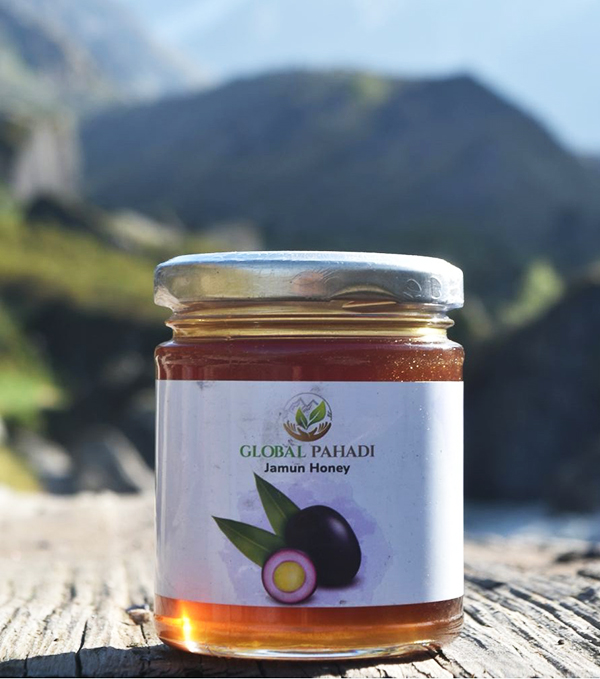
The resulting honey is not-infused and is darker amber to reddish-brown in color and has a moderately thick texture that is smooth and does not crystallize too fast. Jamun honey is moderately sweet and tangy in flavor, which is distinctively close to the Jamun fruit, and its scent is also very unique in that it contains a sweet, fruity scent that reminds one of the Jamun flowers. Jamun Honey also possesses the therapeutic properties of the Jamun tree, and therefore, it is used for multi-purpose in culinary and medicinal applications.
Global Pahadi packed the pure and non-infused Jamun Honey, as we collect the honey from the natural forest regions of Uttarakhand, where Jamun trees grow abundantly. The primary collection areas include:
- Haridwar Forest Area
- Kotdwar Forest Area
- Ramnagar Forest Area
- Rajaji National Forest
- Jim Corbett National Park
- Tarai and Bhabhar Regions of Uttarakhand
Flora Source: The Jamun tree, also known as the Indian Blackberry tree, is a native plant found widely in forests and organic farms. The bees collect nectar from the tiny white blossoms of the Jamun tree and produce this deep amber honey.
Taste and Aroma: Jamun Honey has a distinctly rich, slightly bitter-sweet taste with a mild earthy aroma, reflecting the natural essence of Jamun blossoms.
What makes Jamun Honey special?
Jamun honey is loaded with the necessary nutrients that are beneficial to your health, like vitamin C, which enhances immunity, and B vitamins, which provide energy and improve the nervous system. The honey is also full of vital minerals such as calcium, which makes the bones strong, iron, which makes the blood healthy, magnesium, which makes muscles and nerves healthy, potassium, which keeps the heart healthy, and phosphorus, which keeps the cells healthy.
In addition to normal nutrition, Jamun honey has strong medicinal values, as it is rich in antioxidants such as flavonoids, phenolic acids, and anthocyanins, the same compounds that make Jamun fruit have a purple color. These antioxidants help to safeguard your body against damage by harmful free radicals. The honey is also naturally antibacterial because of the presence of hydrogen peroxide, and its acidic quality eliminates infection.
Blood Sugar Regulation: Jamun honey helps in controlling diabetes by increasing insulin levels in the body and by avoiding the spike of sugar in the blood following consumption.
Digestive Health Enhancement: The Jamun honey contains natural enzymes and antimicrobial qualities, which help in improving your digestion, lessen bloating, alleviate constipation, and promote healthy gut bacteria.
Cardiovascular Support: Eating Jamun honey also helps in reducing bad cholesterol (LDL), keeping the blood pressure normal, and decreasing the risk of heart disease.
Immune System Booster: Jamun honey contains antibacterial properties, which help to cure infections, and the vitamin C and other nutrients in honey make your immune system strong and build the natural defense mechanisms against viruses, bacteria, and fungi.
Energy and Stamina: Natural sugars in Jamun honey provide long-term energy, which makes it ideal for athletes and individuals engaged in brainstorming sessions and heavy workouts.
- If you have a blood sugar and diabetes, then take a half teaspoon of Jamun honey with guidance from a physician.
- You can take one teaspoon of Jamun honey daily empty stomach in the morning to maintain your health.
- For digestive problems, you can take Jamun honey 30 minutes before a meal as it helps to improve the digestive process.
- If you want a natural energy boost, without causing sugar crashes, then you can take a teaspoon of Jamun honey 10-15 minutes before working out or exercising.
- In case you are facing an acne problem, then you can also apply Jamun honey directly on the skin as a face mask to hydrate skin, as it helps to kill acne bacteria and reduce inflammation.
- The quality and shelf life of Jamun honey are greatly influenced by how it is stored; therefore, you should always store Jamun honey in an airtight glass container away from moisture and direct sunlight.
- Do not store the honey in the refrigerator, because it will speed up crystallization.
- To liquefy crystallized honey, place the jar in warm water or keep it in sunlight for some time.
- Also, always use a dry spoon when scooping the honey because moisture can contaminate the honey and create fermentation, which can spoil the honey.
Antioxidants: Jamun honey is rich in powerful antioxidants like flavonoids and anthocyanins that protect your cells from damage, reduce inflammation, slow aging, and help prevent chronic diseases naturally.
Amino Acids: Jamun honey also has amino acids that help to build proteins, repair tissues, create hormones, and support muscle recovery. Because of these amino acids, Jamun honey becomes nutritionally richer, making it a functional food rather than just a source of sweetness.
Enzymes: Jamun honey naturally contains helpful enzymes such as diastase, invertase, and glucose oxidase that can improve digestion and aid the body in the absorption of nutrients. These biological catalysts help your body to digest complex carbohydrates into simple sugars that are more widely utilized by the body.
Natural Sugars: The natural sugars found in Jamun honey consist of fructose and glucose in naturally balanced proportions, and provide sustained energy without refined sugar’s harmful effects. These natural, complex carbohydrates are easily absorbed and metabolized in the body and can provide effective fuel for brain and physical activity.
Q: What time of the year is Jamun Honey harvested?
A: Jamun honey is harvested during May, June, and July, which follow the blooming of Jamun trees in late spring and early summer.
Q: Why is Jamun Honey darker in color than regular honey?
A: The color of honey is related to the pollen and nectar from Jamun flowers, as they contain a compound called anthocyanins, which gives the Jamun fruit its characteristic purple color and is beneficial in providing health benefits in honey form.
Q: How much Jamun Honey should one take daily?
A: It is recommended to take one teaspoon daily for general health maintenance, preferably on an empty stomach first thing in the morning.
Q: What should I do if my Jamun Honey crystallizes?
A: If your jamun honey crystallizes, you can melt it by placing the jar in warm water or keeping it in sunlight for some time.
Customer Praise for Our Glopbal Pahadi Online Store
“Global Pahadi honey is the purest I’ve ever tasted. The aroma, texture, and natural sweetness feel straight from the mountains. Highly recommended for those who want real, organic products.”
Mr. Amit Amoli
“The product arrived beautifully packed and smelled heavenly the moment I opened it. You can clearly feel the purity and effort behind each jar.”