




Kartik Honey

Bee-Honey-PNG-Photos

Global Pahadi

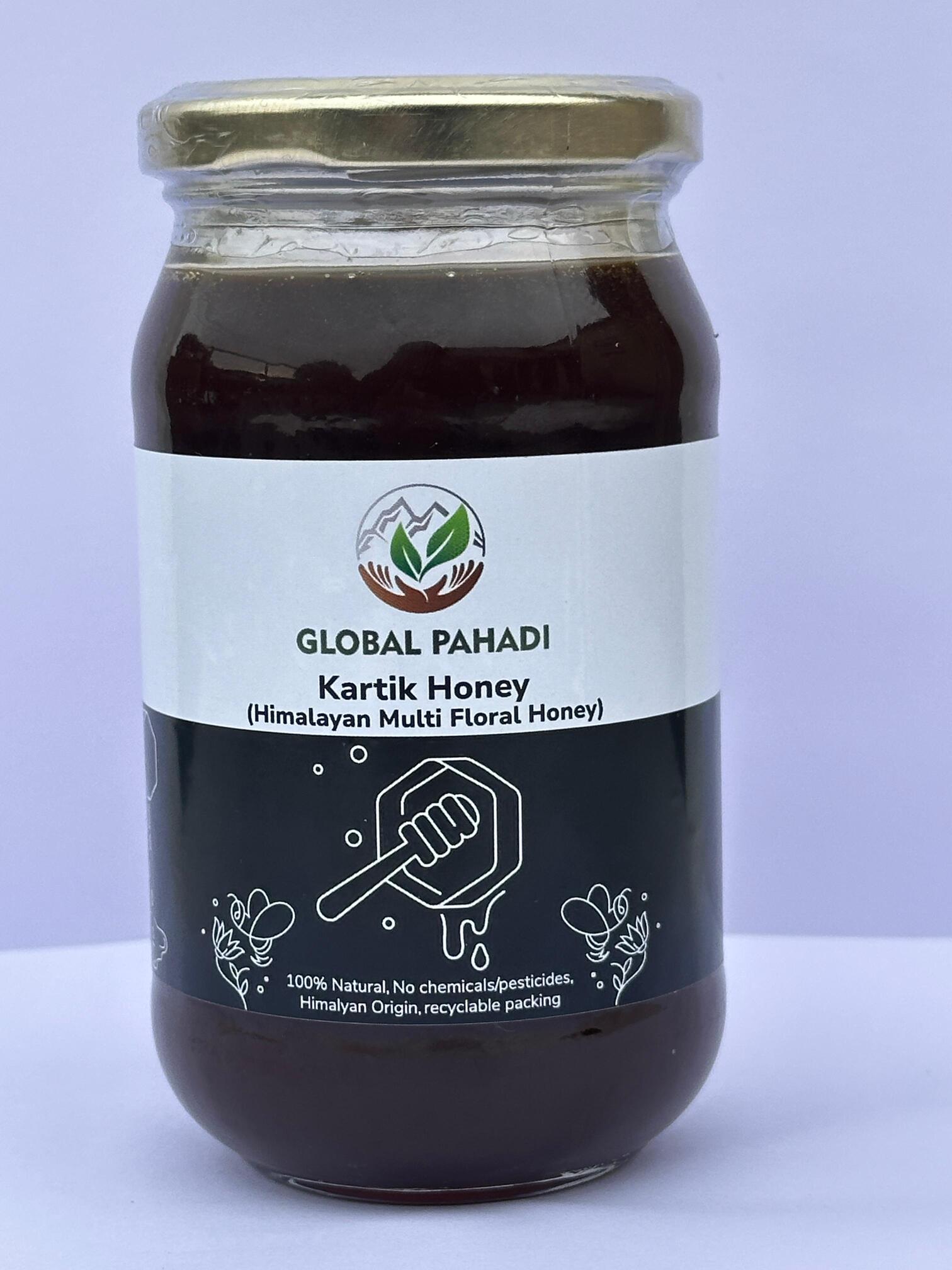
Kartik Honey

Kartik Honey or Kartik Madh is a rare and extremely valuable kind of wild honey that is collected in the auspicious month of Kartik (October-November) as per the Hindu calendar. This honey comes from the product of the high-altitude forests of Uttarakhand, where indigenous Himalayan bees collect nectar and pollen from a unique blend of autumn-blooming wildflowers. The honey has a complex flavor profile, which is deep and earthy, as well as with a touch of wild herbs. The unique flavor of Kartik Honey comes from the various botanical sources of medicinal flowers that are found during the Kartik season.

According to Ayurveda, Kartik Honey is of great importance because of its strong medicinal values, as the honey contains abundant levels of antioxidants, natural enzymes, and minerals that can help to improve respiratory health, digestion, and overall wellness. Most of the traditional users advise taking Kartik Honey on an empty stomach so that the maximum therapeutic effects can be realized.

Kartik Honey harvesting is done sustainably by the local beekeepers who use the old traditions, which have been passed down over the years. These experienced harvesters carefully gather honey from Apis Cerana Indica colonies, C Wall Hives-Khadire, Natural Attraction, and Mud Hives without disturbing their natural habitat so that the bees can sustain their survival in the mountain ecosystem (Wall Hive-Khadra, Jalota, Mud Hive etc).

This golden elixir not only aids in the sweetening but also reflects the links to the old tradition of healing in Uttarakhand. So, if you want to purchase Kartik Honey, then you can consult Global Pahadi, as we provide pure and natural Honey.

Global Pahadi

Van Tulsi Honey

Kartik Honey is mostly found and collected from the high-altitude locations of Uttarakhand, such as:

  • Badrinath Valley
  • Kedarnath Valley
  • Pauri Garhwal
  • Pithoragarh
  • Uttarkashi


Taste and Aroma: Sweet, Tangy, Floral, Gamey, Earthy, or Caramel-like.


The bee flora: The natural vegetation of the Temperate Himalayas has arboreal flora that provides nectar or pollen or both, including Quercus Leucotrichophora (Banj oak), Rhododendron Arboretum (Burans), Myrica Esculenta (Kaphal), Leonia Ovalifolia (Aynor), Ibex Dipyrena, Quercus Semecarpifolia (Kharsu Oak), Q. Dilatata (Moru oak), etc. The coniferous forests in this zone are unique. Pure stands of Pinus Roxburghii (Chir Pine) and Cedres Deodar (Deodar, Cedar), Abides Windrow (Raga), Pinus Wallichiana (Kail), Taxus Wallichiana (Thuner, Himalayan Yew) at places give a pristine look to the slopes. The slopes in the temperate zone also host insectivorous plants such as Drosera Peltata and Utricularia species. The Saprophytes and Parasites are also well represented by Monotropa Uniflora, Dendrophthoe Falcata (Banda), Balanophora in Volucrata, and species of Viscum, Korthalsella, Arceuthobium, Scurrula, etc. The Kedar & Badrinath valleys have a variety of useful plants, some of which have been well known for centuries. These include Cedrus Deodara, Pinus Spp., Abies Pindrow, Quercus Spp, Aconitum Heterophyllum, Paeonia Emodi, Swertia Chirayita, Bergenia Ciliata, Dioscorea Deltoidea, Angelica Glauca (Choru), etc. Plant species like Nardostachys Grandiflora (Jatamansi), Podophyllum Hexandrum (Himalayan May-Apple, Papri), Picrorhiza Kurrooa (Kutaki), Gentian Burro, Armenia Benthic (Bal char), Rheum Moorcroftianum (Dole), Ephedra Gerardiana, Dactylorhiza Hatagirea (Hatthajari), etc., are common in this zone and are of immense medicinal value.

What makes Kartik Honey special?

Kartik Honey is among the most valuable types of Himalayan honey, which is gathered in the holy month of Kartik (October-November) when some wildflowers grow in the untouched mountainous areas. This honey is so special because it is a special seasonal harvest of high-altitude plants that only exist during this season, thus giving this honey some unusual phytonutrients and medicinal ingredients that are absent in commercially processed varieties of honey.

The harvesting time also makes the Kartik Honey unique because during this time the bees are foraging on a season when certain medicinal flora are in bloom in the mountain ranges. Bees take advantage of the cool climate of the Kartik month to collect the pollen and nectar from Himalayan flowers and produce honey that is rich brown-amber in color with a complex flavour.


Global Pahadi keeps this valuable honey in its purest natural state and untouched by any human influence, which retains the beneficial enzymes, antioxidants, and the true flavors of the Himalayan ecosystem, and each spoonful is as pure as the mountain itself.

Colorify-AI-Image-1765436337520
  • Kartik Honey possesses antibacterial and antiseptic properties, which are useful in the treatment of minor cuts, burns, and skin infections.
  • It is a natural expectorant and anti-inflammatory, and it helps to clear out congested airways, calms sore throats, and eases chronic coughs.
  • Kartik Honey is a natural immunity booster, and it fortifies the body against winter diseases such as flu, colds, and respiratory diseases, which are prevalent in the season.
  • It contains an equal blend of fructose and glucose that provides long-term energy throughout the day, and can be used by people who have to be more physically active during the wintertime.
  • Kartik Honey is a special combination of phytonutrients, antioxidants, and season-specific enzymes, which offers a concentrated source of nutrients that are a reflection of the therapeutic benefits of various medicinal plants that are in blossom during the Kartik month.
  • Mix one teaspoon of Kartik Honey in warm milk or herbal tea before going to bed to ensure relaxation and the quality of sleep.
  • You can take one tablespoon of pure Kartik Honey in the morning on an empty stomach to activate the natural enzymes and antimicrobial effects of raw Honey. The regular intake of Kartik Honey helps in digestion and increases immunity, as well as supplying the body with long-lasting energy in the morning.
  • To make a strong detoxing drink, add 1 tablespoon of Kartik Honey to a glass of lukewarm water and squeeze fresh lemon into the glass. This mixture helps in clearing toxins in the body, assists the liver in working, enhances digestion, and jump-starts your metabolism.
  • You can use Kartik Honey directly as a face mask because it contains antibacterial and moisturizing ingredients and can cleanse the pores, acne, brighten the skin tone, and naturally hydrate your skin.
  • Kartik Honey is a natural antibacterial and healer that is used topically on minor scrapes, burns, scrapes, or skin irritations. The honey also forms a protective layer, inhibits infection, and enhances the process of tissue regeneration and wound healing.
  • It is always advisable to store Kartik Honey in airtight glass containers or food-grade plastic bottles containing tight lids because Glass jars do not absorb the smell and preserve the purity of honey.
  • Store honey in a cool, dark place to preserve its nutrients because honey is light-sensitive and will rapidly lose all of its properties when exposed to sunlight.
  • Crystallization does not mean your honey is rotten or low-grade. When honey crystallizes, the glucose in the honey separates from the water and forms crystals; this process occurs naturally in pure, unprocessed honey. Kartik Honey is made of natural glucose, which can easily crystallize over time and form grainy crystals without losing any of its nutritional value.
  • In case your Kartik Honey crystallizes, carefully place the still container in a bowl of warm water, and stir the honey occasionally until the crystals are no longer visible. This mild method of warming does not destroy the enzymes and antimicrobial qualities of honey but rather conserves its nutritional characteristics.

Natural Sugars: Kartik honey consists of fructose and glucose, which are immediate sources of energy that are absorbed by the body with ease. These natural sugars provide about 64 calories per tablespoon; thus, they are a good source of natural fuel for physical exercises and mental alertness throughout the autumn season.


Natural Enzymes: Kartik honey is rich in useful enzymes such as glucose oxidase, diastase, and invertase, which help in the digestion and absorption of nutrients. These enzymes are active when the honey is raw and unprocessed and help maintain gut health and the normal metabolism within the body.


Amino Acids and Proteins: Kartik honey contains nearly 18 varied amino acids, with proline being the most abundant of the group. These amino acids help in tissue repair and in improving the immune system.


Organic Acids and pH Balance: Kartik Honey contains valuable organic acids, mostly gluconic acid, that help to keep the natural acidic pH of honey (3.5-4.5). These acids make the honey antimicrobial and do not interfere with the preservation of the honey, but can aid in the digestive system when they are ingested.

Q: What is the time of harvesting Kartik Honey, and how is Kartik Honey harvested?

A: Kartik Honey is harvested during the months of mid-October to mid-November, which is the month of Kartik in the Hindu calendar. It is collected in an environmentally friendly manner by local beekeepers through the ancient methods of collecting honey with the help of old traditions, which have roots in many years past; they collect honey without interrupting the natural habitat of the bee colonies.


Q: What are the features that make Kartik Honey special?

A: It has a distinctive flavor because it is prepared using different botanical ingredients available in the Kartik season, such as late-flowering medicinal plants that thrive in the cold autumn weather.


Q: In what ways is Kartik Honey different from any other commercial honey?

A: Kartik Honey is made of very special phytonutrients and medicinal components of special plants that grow at high altitudes in large quantities during the season, and it is maintained in its purest natural form.


Q: Does Global Pahadi process Kartik Honey?

A: No, Global Pahadi preserves this precious honey in its natural form that has not been spoiled by human activities, has both helpful enzymes and antioxidants, and genuine Himalayan flavours.

Customer Praise for Our Glopbal Pahadi Online Store

Cart (0 items)
Cart (0 items)
Select the fields to be shown. Others will be hidden. Drag and drop to rearrange the order.
  • Image
  • SKU
  • Rating
  • Price
  • Stock
  • Availability
  • Add to cart
  • Description
  • Content
  • Weight
  • Dimensions
  • Additional information
Click outside to hide the comparison bar
Compare